Mathine

Mathine publishes mathematics-first, bounded analyses across many domains — science, operations, forecasting, discovery, and studio work. Each run is organized as a stack of reusable parts: a kernel that defines the inference contract (what may be concluded, and when to HOLD, qualify, or refuse), math machines that apply operator families to evidence, methods that compose machines into repeatable workflows, and runs that publish replayable outputs with a minimal receipt spine — so readers can assess the work and reuse the patterns in new projects.

Every run starts from real evidence — documents, datasets, logs, benchmarks, and observed outcomes — and ends with structured outputs: an explicit regime label, cohort checks when relevant, assumptions, falsifiers, and a compact diagnostic stamp. Mathine’s goal is simple: make verification cheaper than belief, and make conclusions earn their authority by staying inside their declared validity corridor.

A sleek, matte-black server rack filled with glowing cobalt-blue network switches and neatly organized fiber optic cables, each strand emitting a faint luminescent pulse. The rack stands in the center of an ultra-modern data center with glossy white floors and reflective dark glass walls displaying subtle reflections of the hardware. Cool, diffused overhead LED lighting casts crisp, precise shadows, emphasizing the geometry of the machines. The mood is highly professional and trustworthy, evoking mathematical rigor and reliability. Captured at eye level with photographic realism and a moderate depth of field, the foreground equipment is in sharp focus while the background racks blur slightly, suggesting vast computational power dedicated to scientific news analysis and logical verification.
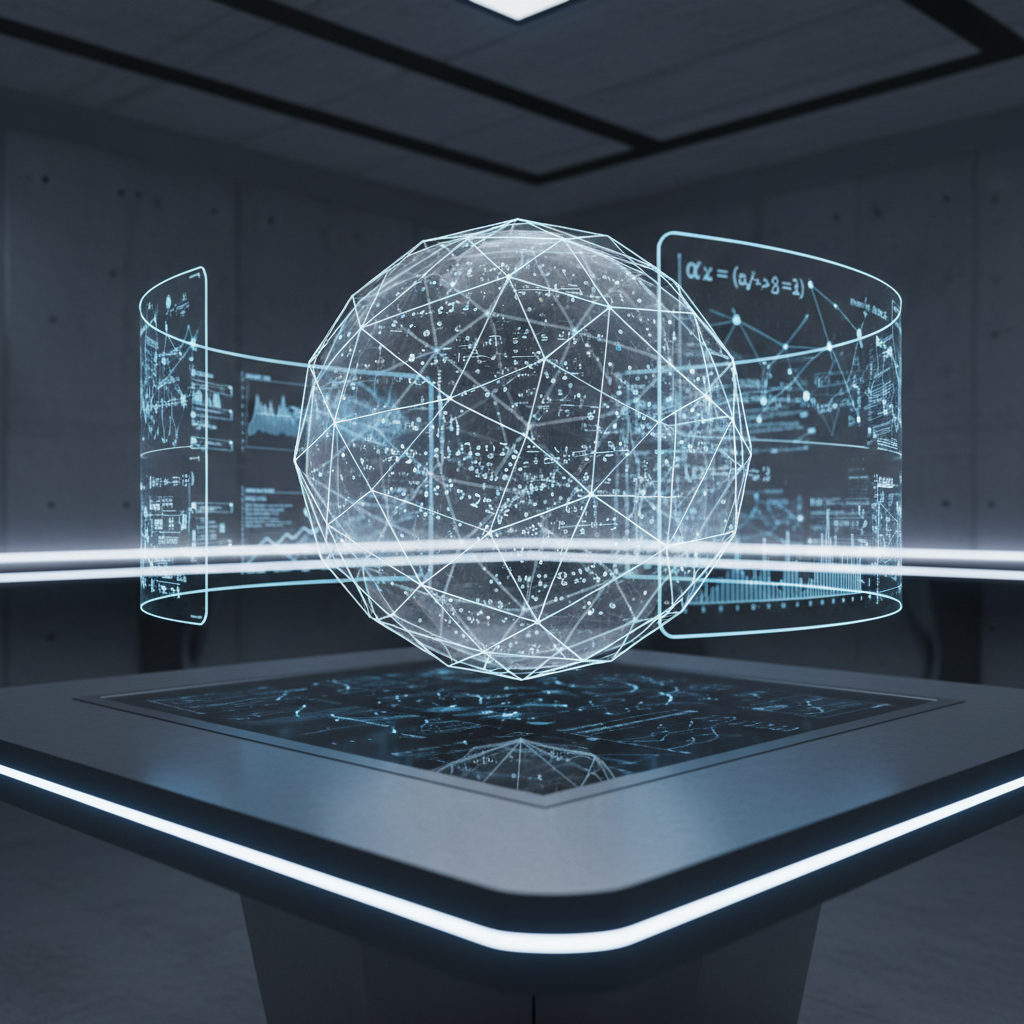
A transparent, holographic globe composed of interlocking geometric wireframe polygons hovers above a brushed aluminum table, each polygon filled with tiny mathematical symbols and logic operators. Around the globe, semi-transparent panels display real-time scientific graphs, equations, and semantic networks linking key terms. The setting is a dim, futuristic research lab with smooth concrete walls and a large dark glass display surface beneath the globe. Cool blue and white accent lighting creates a calm, analytical atmosphere, with subtle rim lighting on the globe’s edges. Photographic realism from a slightly elevated three-quarter angle highlights depth and clarity, with a shallow depth of field softly blurring distant interfaces, symbolizing Mathine’s precision in extracting hypotheses from global scientific news.

Who We Are

Mathine publishes bounded inference across complex domains — research, news, incident reports, benchmarks, datasets, and policy notes. Everything enters as a claim. Trust is not assumed; it is earned through explicit evidence contracts and replayable outputs.

The work is built from reusable components: kernels that define the inference contract (what may be concluded and when to HOLD, qualify, or refuse), math machines that apply operator families to evidence, methods that compose machines into repeatable workflows, and runs that publish results with receipts. This structure is designed for the boundary where mathematics meets machinery — where systems drift, interfaces fail unevenly, and “it worked once” is often mistaken for “it’s reliable.”

In practice, a run converts high-complexity events into bounded, verifier-minded narratives by extracting:

  • What is attributable: facts tied to sources
  • What is hypothesized: interpretation, explicitly hedged
  • Where regimes change: the edge cases and cohorts where conclusions can flip
  • What invariants should hold: the implicit contract the system promised
  • What governance learns: the principle that survives the specific story

That is why Mathine reads like field notes: explicit links, minimal overreach, and a compact diagnostic stamp — so readers can see not only what happened, but what would falsify it.where trust holds, where it collapses, and what would make it verifiable.

How Mathine Works

Mathine operates as a governed workflow: every item enters as a claim and leaves as a run with a defined scope of validity. The process has four stages:

Evidence contract — decide what evidence is admissible, how it will be extracted, and what counts as missing or out-of-scope.
Regime mapping — label the conditions and cohorts under which the claim is expected to hold, and surface the boundaries where it fails or flips.
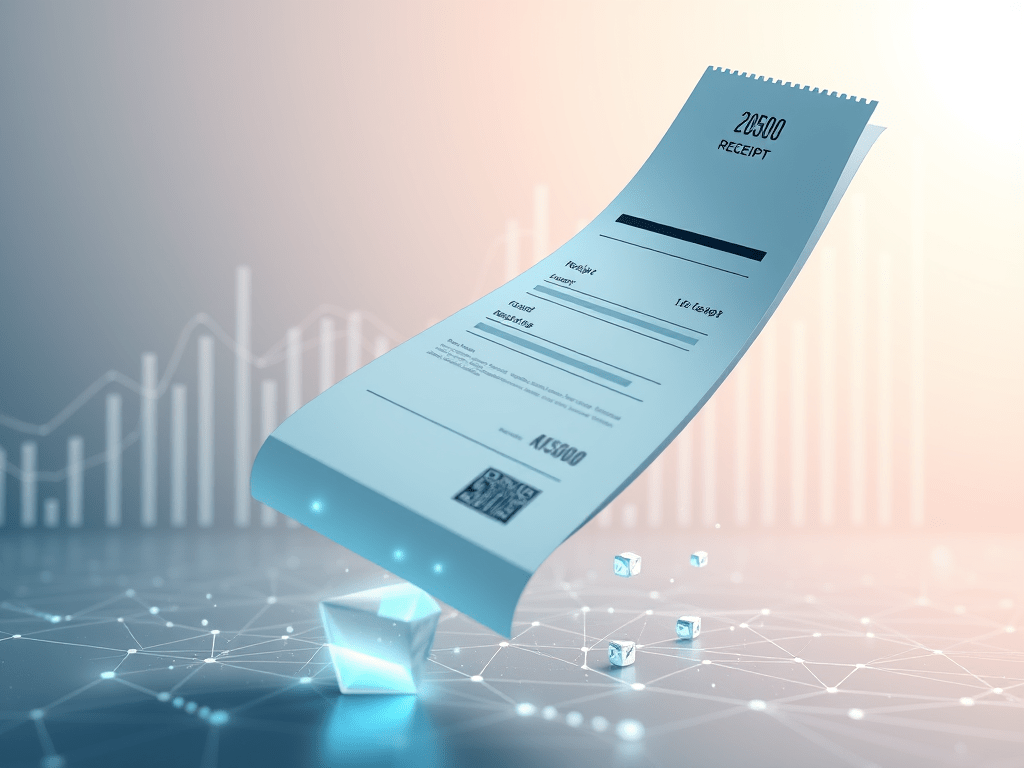
Receipts — emit the minimal replay package: sources, extraction rules, intermediate values, assumptions, and falsifiers.
Closure — turn what remains uncertain into a concrete next step: tests to run, data to collect, or an explicit downgrade/abstain outcome instead of overclaim.

Different kernels and methods implement these stages differently, but the discipline stays the same: conclusions earn authority only inside their declared validity corridor.

A pristine white workspace featuring a slim, silver laptop open on a light ash-wood desk, its screen displaying a detailed, color-coded semantic graph that links scientific news headlines through mathematical logic arrows and set diagrams. Beside the laptop, a dark graphite notebook lies open with neatly printed formulas and logical symbols. Large floor-to-ceiling windows reveal a softly blurred cityscape of modern research buildings. Natural daylight floods the room, diffused through thin white shades, creating gentle reflections on the laptop’s metallic surface. The composition is clean and minimalist, shot from a slightly elevated angle with photographic realism and sharp focus throughout, conveying a professional, organized atmosphere where complex problem-solving and trustworthy analysis of scientific information quietly take place.
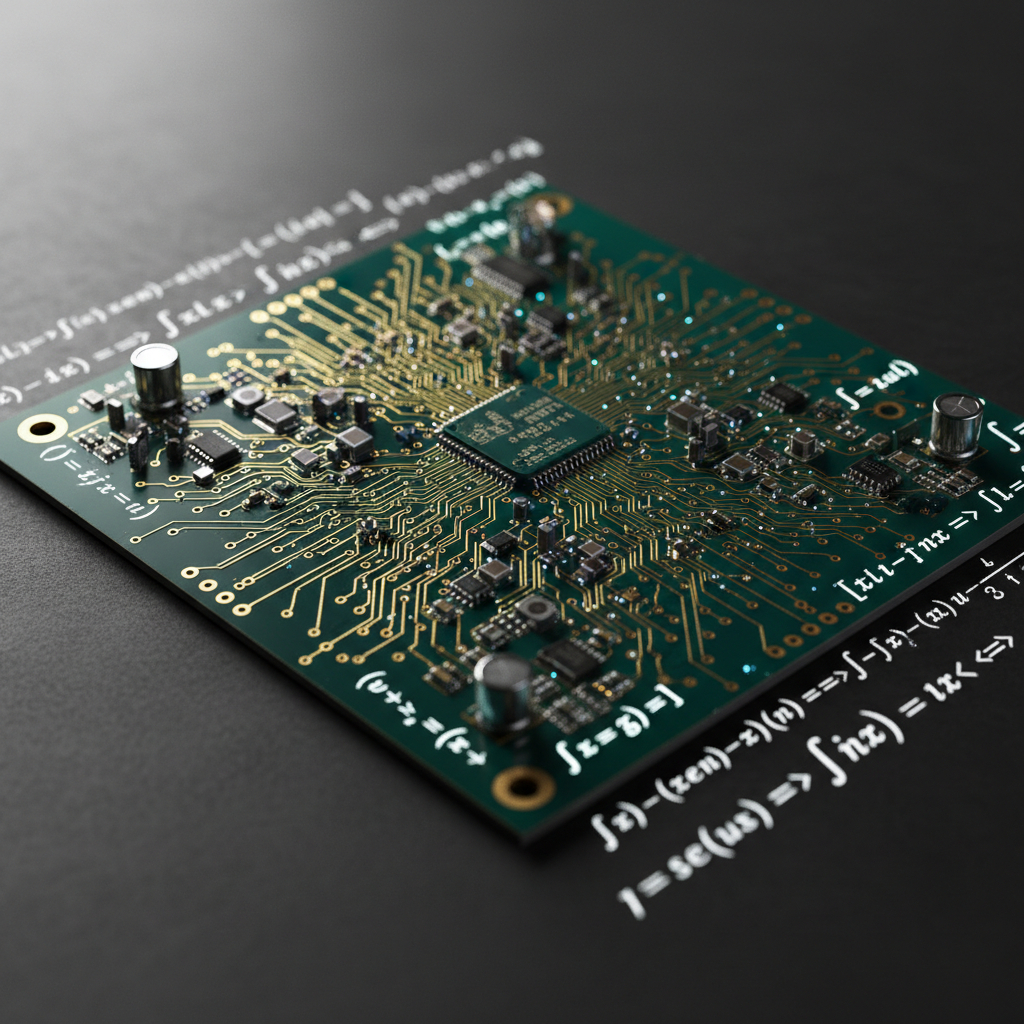
An intricate circuit board rendered in photographic realism, its deep emerald surface crisscrossed with precise gold traces that gradually morph into elegant white mathematical equations and logical implication arrows toward the edges of the frame. Tiny microchips and capacitors are sharply detailed, glowing faintly with embedded blue indicator lights. The board rests on a dark graphite surface with a subtle texture, in a controlled studio environment. Focused, directional side lighting from the left creates fine highlights on metallic components and soft shadows that emphasize depth. Captured in a close-up macro perspective with an extremely shallow depth of field, the central area is crystal clear while the periphery melts into smooth bokeh, evoking the fusion of hardware, logic, and trustworthy computation that powers Mathine’s semantic analysis engine.

Mathine
on Demand

Mathine on Demand delivers dedicated research notes and runs tailored to your domain, workflow, and risk profile.

The public posts on this site are curated open samples of the work in action. By invitation, we apply dedicated kernels and methods to specific incidents, papers, datasets, or decision questions — producing bounded outputs with explicit regimes, cohort checks when relevant, clear assumptions, falsifiers, and receipts, plus a compact diagnostic stamp designed for audit and decision use.